



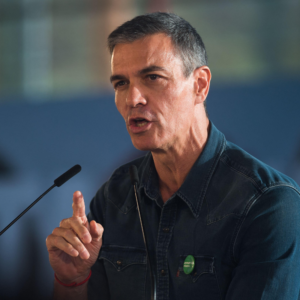
18-year-old Sofiia analyses what the recent disagreement with the US could mean for Spain
On 28 February, the United States and Israel jointly attacked Iran, killing the country’s supreme leader, Ayatollah Ali Khamenei, and sparking a wider conflict that has affected numerous countries across the Middle East.
Iran has taken control of the Strait of Hormuz, the narrow waterway through which a fifth of global gas supplies usually pass, sending fuel prices soaring around the world.
Soon after the initial attacks, as tensions escalated, the Trump administration reached out for support among US allies, only to be met with denial.
View this post on Instagram
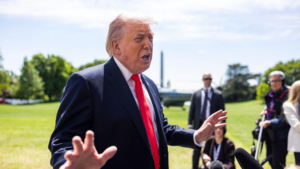
Spain refused to allow the US to use the military bases on its territory for attacks on Iran, condemning Israel and the US’s “unilateral military action”. President Trump reacted by threatening to cut off trade ties with the country, which is a pattern of his diplomatic strategy, where rhetoric retaliation is used as a form of pressure. “We don’t want anything to do with Spain,” he said.
Spain’s prime minister Pedro Sánchez expressed concern that the attacks on Iran could lead to another costly military quagmire in the Middle East, similar to past American interventions in Iraq and Afghanistan.
“In short, the position of the government of Spain can be summarised in four words,” Sánchez said.“No to the war.”
Sánchez has been more forthright and vocal compared to other world leaders in his condemnation of the US government’s interventions in the Middle East.
In response to the economic threat against Spain, the Élysée Palace, the official residence of the president of France, said Emmanuel Macron had conveyed his “solidarity” with Spain during a phone conversation with Sánchez. European Council president António Costa also said he had spoken to the Spanish leader “to express the EU’s full solidarity”.
In the third week of the war in Iran, the US government also clashed with their NATO allies when they were asked to help reopen the Strait of Hormuz. After that, other countries in the EU also rejected the US request: “It’s not our war, we didn’t start it,” said Boris Pistorious, Germany’s defence minister. Japan, Italy and Australia also said they don’t plan on getting involved.
Canada also refused to cooperate. Defence minister David McGuinty said: “Canada is not involved in the prosecution of this war and Canada has no intention of being involved with the prosecution of this war,” when asked about reopening the Strait of Hormuz.
Future of US–Spain relations
Diplomatic relations between the US and Spain continue as normal. Both embassies remain stable, but tensions are rising, with the US appearing more publicly offended than Spain.
A close Trump ally, US senator Lindsey Graham of South Carolina, told Fox News that Spain had “lost its way” and called for the US to move its air bases from Spain “into a country that’ll let us use them”.
Sánchez’s reaction to the US threats has been cordial. In a ten-minute televised address from the prime minister’s official residence in Madrid on 4 March, he stated that the government was studying economic measures to counter the impact of the conflict on Spaniards, though he avoided directly referring to Trump’s trade threat.
Harbingers’ Weekly Brief
Subscribe to the Harbingers’ Weekly Brief, a newsletter written by the editorial board of Harbingers’ Magazine, the world’s youngest newsroom, delivered to your inbox every Monday morning.
![author_bio]()
![author_bio]()


He did say, of the Iran war: We will not be complicit in something that is bad for the world and that is also contrary to our values and interests, simply out of fear of reprisals from someone.” The “someone” obviously being Donald Trump.
Analyst and former CIA officer Bjorn Beam stated: “Trump’s Oval Office threat to ‘cut off all trade with Spain’ is coercion in plain sight, and it also betrays how stretched he already is on Iran.” Beam thinks that the US president wants to punish Spain as an example for other European governments that hold back on US operations and defence spending as the conflict in Iran develops.

Federico Steinberg from Georgetown University’s School of Foreign Service said that the US cannot impose tariffs solely on Spain as it is a part of the European Union trading bloc, and because emergency tariffs were declaredillegal by the Supreme Court. “There could be other types of actions, such as measures affecting US exports to Spain, investments, or visas, as well as financial matters,” he added.
Ideological differences could also be at play here, with Spain having closer tiesto the Venezuelan regime and its acting president, Delcy Rodríguez. The government has also signalledto Spanish companies in Venezuela, including oil giant Repsol, that they have its full backing, a stance that directly follows Madrid’s refusal to recognise the US military intervention that captured former Venezuelan leader Nicolás Maduro.
At this stage, it is possible that the US will walk away from this kind of conflict as they are dealing with their own crisis, especially with the Trump administration facing backlashbecause of how the conflict in Iran is affecting gas prices.

Edited by:

© 2026 The Oxford School for the Future

