



Samuna B.K from the Nepali Newsroom profiles ex-rapper Balen Shah, who may become Nepal’s new prime minister
Balendra Shah, known simply as Balen – a structural engineer by profession and a rapper by passion – is now the leading candidate to become Nepal’s new prime minister in the election on 5 March.
He rose to prominence in Nepali politics in 2022, when he was voted mayor of Kathmandu, the country’s capital city and largest metropolis, in a landslide victory. He surprised everyone by winning as an independent candidate, the first person to do so without the backing of a major political party.
He gained strong support, especially from young people who wanted change. As mayor, he focused on issues such as transparency, city management and waste disposal.
Harbingers’ Weekly Brief
Subscribe to the Harbingers’ Weekly Brief, a newsletter written by the editorial board of Harbingers’ Magazine, the world’s youngest newsroom, delivered to your inbox every Monday morning.
![slide image]()
![author_bio]()
![author_bio]()


The 35-year-old resigned as the mayor of Kathmandu Metropolitan City on 18 January and joined the Rastriya Swatantra Party (RSP), led by former TV presenter and journalist Rabi Lamichhane.
Balen joined the RSP after reaching an agreement that he would become leader of the parliamentary party and PM candidate, while Lamichane would be the RSP’s president.
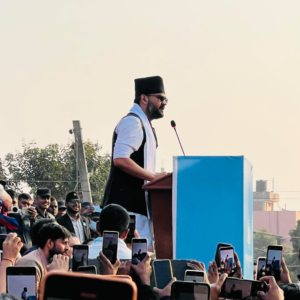
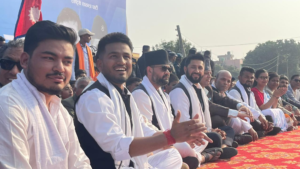
His first public appearance was the following day, 19 January, in Janakpurdham, a historic city and the capital of Madhesh province in southern Nepal, where the RSP launched its election campaign. Tens of thousands of spectators and supporters from nearby districts gathered to attend the rally.
Shah delivered a brief speech, stating that he was unable to accomplish much as Kathmandu’s mayor and he now wished to change the people’s perception by becoming PM.
The crowd was buzzing during his address. One spectator, Uday Mahato, told Harbingers’: “The crowd went crazy as Balen spoke and took pause between each sentence. I got goosebumps listening to him.”
It is significant that the RSP launched its campaign in Janakpurdham. Also, Balen spoke in Maithili,the language of the people of Madhesh, and stated that they should visit Kathmandu for leisure not to demand rights in their own country – a boost for federalism.
Rapper turned politician
Born on 27 April 1990 in Naradevi, Kathmandu, Balen became interested in national issues as a child. His father used to take him to Singha Durbar (a government complex that was largely destroyed in the Gen Z riots last September), where he worked as an Ayurvedic doctor. He accompanied his father to important meetings where Balen would listen and occasionally share his opinion.
As a rapper, he always shared nationalistic views and the voice of the voiceless. He became popular in Nepal’s hip-hop community through rap battles and songs that talked about social issues such as corruption and lack of accountability.
One of his social media posts became very popular after he became mayor of Kathmandu. During the 2017 general election, he posted on Facebook that he did not vote this time because there were no suitable candidates, but that in the next election, “I’ll vote next time and vote myself”.
After the Gen Z protests in Nepal on 8 and 9 September, Balen endorsed Sushila Karki as the interim PM, saying that he would like to become prime minister after the election.
Young people in Nepal are supporting Balen because they are rejecting old parties. They believe that the old leaders do not understand their struggle or care for their future.
For many years, the same parties and leaders have been in control in Nepal, leading to corruption and abuse of power. Last year’s Gen Z revolution against corruption and legacy parties resulted in a crackdown on youth, killing 76. Young Nepalis are hoping that the new parties, especially the RSP, will transform the country the way the youth desire.
Balen has turned up the election heat in Nepal, because he is directly challenging the former prime minister KP Sharma Oli, who was ousted by the Gen Z protest, in his home constituency.
New leaders, new ideas
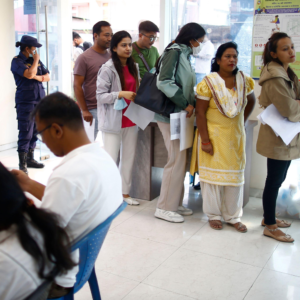
Harbingers’ spoke to several people about the upcoming election and Balen’s chances of becoming prime minister.
Gayani Shah, who teaches English at Shree Bal Vikas Samaj Basic School in Kathmandu, will vote for the RSP party because it has candidates who represent new thinking, fresh ideas and strong principles.
“These candidates want to do politics differently from the old system. They seem capable of understanding people’s problems and finding solutions. They are committed to honest and responsible leadership,” he said.
“Therefore, I have decided to vote for Ghanti [meaning bell, the RSP’s election symbol] with the hope of bringing positive change to the country,” he concluded.
Mira Timang, another teacher, is also voting for the RSP because she is tired of old parties: “They promise many things but do nothing. The RSP feels new and honest. I think young people should get a chance to lead the country.”
Renu Suman, 18, said she wants to vote for the RSP because Balen did many good things when he was the mayor of Kathmandu.
Sarita Sharki said, “I hope Nepal becomes a country where youth don’t have to go abroad for jobs. I see these capabilities in new parties. So I vote for new leaders.”
Edited by:

© 2026 The Oxford School for the Future