Harbingers’ Magazine is a weekly online current affairs magazine written and edited by teenagers worldwide.
harbinger | noun
har·bin·ger | \ˈhär-bən-jər\
1. one that initiates a major change: a person or thing that originates or helps open up a new activity, method, or technology; pioneer.
2. something that foreshadows a future event : something that gives an anticipatory sign of what is to come.
We and our partners may store and access personal data such as cookies, device identifiers or other similar technologies on your device and process such data to personalise content and ads, provide social media features and analyse our traffic.
The year is 2025. Women vote, go to university, are financially independent and should be respected by men. But… is that truly so?
Does society really allow women to be on the same level with men, both professionally and elsewhere? Have we reached the same rights between two sexes, or does it only seem like that on the surface?
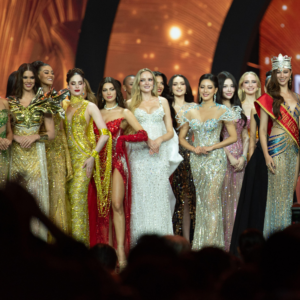
These questions deserve to be asked again in the light of the recent Miss Universe scandal that took place in Thailand on 4 November. Nawat Itsaragrisil, executive director of the Miss Universe Organization (MUO), reprimanded Miss Universe Mexico, Fátima Bosch, causing her to stand up and leave the room, as did several other contestants.
If only his reprimand, which included accusing Bosch of skipping promotional activities, had been professional, it would have been at least understandable. But it was not in the slightest. On the contrary, it was sexist and disrespectful, as Itsaragrisil called her a “dumb head” and interrupted Bosch’s attempts to explain.
When he dismissed her, Bosch refused to sit. She told Itsaragrisil, “I have a voice. You are not respecting me as a woman.” As security was summoned, Bosch left the room; a few other contestants also left in support, including the reigning Miss Universe, Denmark’s Victoria Kjær Theilvig. The incident was livestreamed.
Harbingers’ Weekly Brief
Subscribe to the Harbingers’ Weekly Brief, a newsletter written by the editorial board of Harbingers’ Magazine, the world’s youngest newsroom, delivered to your inbox every Monday morning.
See you on Monday!
Ooops - please try again.
Afterwards, Fátima Bosch spoke out in a video posted on Instagram. She defended herself, stating that she considered the situation unfair. “I just try to be kind. I think that the world needs to see this because we are empowered women, and this is a platform for our voice.”
“We’re in the 21st century, and I’m not a doll to be made up, styled and have my clothes changed,” Bosch also said in a Spanish-speaking interview, addressing her supporters back home.
As for Nawat Itsaragrisil, he issued multiple apologies for his actions – even though he did overuse the excuse of “I’m simply human”. However, not a single one of those apologies was directed at Miss Universe Mexico.
Beauty pageants and ethics
But, are we dolls to them, regardless? The chances of Itsaragrisil’s sentiment being isolated are very low, after all. Is it possible that organisations that cater to women, but are made and run by men are harmful and still treat women as if we are inferior?
Yes, it is. It seems that society continues to think that beauty is the most important part of a woman, and objectifies us, especially at these kinds of events, which are focused around impossible beauty standards.
Beauty pageants have a long and chequered history:“Alongside patriotic and social themes, beauty pageants continue to be platforms with a double impact: they can support leadership and philanthropy, but at the same time they invite criticism due to narrow standards of beauty and ethical risks.”
She’s not a doll, but does the Miss Universe Organisation agree? It is unlikely. There is some contradiction to Bosch’s sentiment as she is still participating in an event where beauty standards are not universal, and it is true that it might be the last place on Earth she would find respect for not being a doll.
Nonetheless, it only further highlights current issues regarding gender inequality and unethical business practices. Miss Universe Mexico still deserves respect. And in the finale on 21 November, Fátima Bosch won the contest,a result that has intensified calls for transparency and accountability.
Continued controversy
Opaque and subjective voting criteria have long plagued pageants, and this year the controversy around Miss Universe deepened further.
Fatima Bosch, winner of Miss Universe 2025, in New York.
Musician Omar Harfouch resigned as one of the judges days before the finale and alleged that 30 finalists were preselected by an “impromptu” unofficial jury and that the outcome was “pre‑scripted”. According to the Independent, some Mexican news outlets alleged business ties between Miss Universe pageant co‑owner Raúl Rocha Cantú and the winner’s father, a senior executive at Mexican state oil company Pemex.
Rocha Cantú denies wrongdoing; Pemex confirmed a temporary 2023 contract with companies linked to Rocha Cantú but said the relationship no longer exists; and Mexico’s attorney general has opened an investigation into alleged organised‑crime links involving Rocha Cantú.
These developments highlight two interlocking problems. First, the long history of scandal in pageantry: from discriminatory rules and harassment to opaque business practices that show these events are not immune to the power dynamics and commercial interests that shape so much of public life. Second, they expose how supposedly female-centred institutions can still operate in ways that diminish or exploit women.
Feminist solidarity
Yet the story is not only one of exploitation. The solidarity shown by contestants who walked out with Bosch is a bright counterpoint. It shows how women are often keen to support rather than go against one another. Feminism as a movement started out the same way, and has thrived thanks to it too.
However, a crucial tenet of feminism is support for women’s autonomy – including the right to compete in pageants if they choose.
Many contestants view Miss Universe as a platform to inspire others, fund education and advance charitable causes.
Dismissing their choices because the institution is flawed would be paternalistic in its own way. We cannot diminish how important it is for them, regardless if we think it is adequate or not.
Catriona Gray, Miss Universe 2018, said: “I think we, women, feel this ticking clock that society imposes on us, and in institutions like Miss Universe they say: ‘No, women do not age, women are wonderful at any age.’ I think this is wonderful.”
So if anyone needs a litmus test for sexism, ask their opinion on this scandal and brace for impact.
Born in 2007 in Kyiv, Sofiia studies in Benitachell, Spain. She is interested in business studies, particularly marketing and plans to study at Geneva Business School in Barcelona. For Harbingers’ Magazine, she writes about gaming and books.
In her free time, Sofiia enjoys video games, reads dystopian fiction, and spends time with her dog. She also was a part of a debating team in Ukraine and won the best speaker award at the Dnipro Open Debating Tournament in 2022.
Sofiia speaks Ukrainian, English, Russian, French, and a bit of Spanish.
Film & Book Club Editor and Global Newsrooms Manager
Warsaw, Poland
opinion
🌍 Join the World's Youngest Newsroom—Create a Free Account
Sign up to save your favourite articles, get personalised recommendations, and stay informed about stories that Gen Z worldwide actually care about. Plus, subscribe to our newsletter for the latest stories delivered straight to your inbox. 📲
We use cookies to ensure that we give you the best experience on our website. If you continue to use this site we will assume that you are happy with it.