



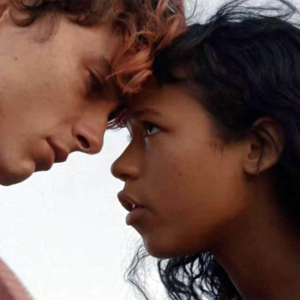
Kaja, 16, analyses Luca Guadagnino’s iconic 2022 picture
Spoiler Alert: The following article discusses the plot of Bones and All. We suggest reading it only after you have watched the film, and, ideally, also read the book.
They could’ve eaten each other at any point or time showing how vulnerable they really were – that expresses how people always have the choice to hurt one another, but it’s about the acknowledgement of having a decision not to cause the other one pain, strictly because of the true feelings of the relationship.
Bones and All, a 2022 film directed by Luca Guadagnino is an adaptation of a book of the same title, published in 2015 by an American author Camille DeAngelis. Starring Taylor Russell as Maren, Timothée Chalamet as Lee, and Mark Rylance as Sully, the film had the honor to be presented during the 2022 Cannes Festival, winning the Best Director award, but missing out on the prestigious Palme d’Or.
What’s so valuable and special about this movie is that its true message is obscured by a peculiar and terrifying symbol, mixing consuming-like love, with every terrifying aspect of it, with the realities of addiction and the inability to escape one’s nature, and the need to deal with it all together with someone else.
That theme in the film is usually misunderstood, hence leading to largely biased opinions from its audience – some viewers think it’s the most romantic and outstanding film that has ever been released, and some cannot even get through the first half because of how disturbing and dramatic some scenes are.
The world’s core idea – real but almost impossible to achieve love – is expressed by a metaphor of a physical and psychological desire to eat human flesh. Cannibalism is a very controversial and secretive topic – for most societies, eating another human’s flesh is one of the most disgusting things any human can do, and thus comes with a very powerful taboo.
Effectively, the balance between something so delicate and intimate as the emergence of love, and one of the worst sins a human can commit, is utterly contradicting, shocking and an enormous challenge for a director to stage.
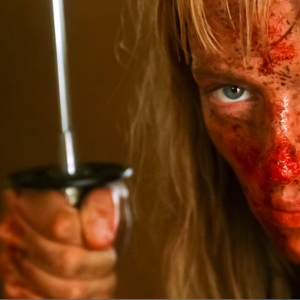
Arguably, Bones and All uses cannibalism as an allegory of addiction in true love, and every repulsive aspect of it. It shows how love itself is so much deeper than what it is considered in the present world, because to truly love someone you need to acknowledge them with all the darkness that lives in them.
People so often fantasize about falling deeply in love, having someone to protect them and admire them – without having to wonder whether they will suddenly leave them.
However, this fantasy does not take into account that such a dream-like relationship results from an enormous effort from both sides – and Guadagnino, making this film, wanted us to see how difficult it is even to imagine it, how people have to sacrifice themselves for each other, how love must mean being able to cooperate and living with each other’s traumas. And what comes with that? To what extent does an individual need to go to accept 100% of someone?
Moreover, not acknowledging that true love comes with sacrifices makes it extremely likely to unknowingly become toxic – depending on each other so much may bring people to liberation from never-leaving problems but may also end in a catastrophe, where one cannot take the weight of their issues combined.
Bones and All indirectly approaches the addiction issue, showing two individuals on the edge of society, who in finding one another ground a belief they will get better together. Guadagnino, basing it on DeAngelis book, works around cannibalism but in reality it can be transformed into any type of consuming habit. Seeing how Lee and Maren cannot stop themselves from “relapsing” gives the viewer a feeling of their struggle, makes them perceive not only a connection but also forces them to think deeper about their misery.
Harbingers’ Weekly Brief
Subscribe to the Harbingers’ Weekly Brief, a newsletter written by the editorial board of Harbingers’ Magazine, the world’s youngest newsroom, delivered to your inbox every Monday morning.
![slide image]()
![author_bio]()
![author_bio]()


Those moments of silence, usually Maren’s, when we feel how disappointed she is in herself, and then Lee trying to calm her down, are what truly represent the entanglement in dependence, where guilt feeds reassurance, and care becomes inseparable from need.
The most touching part of the film is when Lee gets hurt by Sully, a pervert stalking Maren. The last minutes show the powerful and ultimate testament of love, when Lee sees his wounds as an opportunity to show his love to Maren. He doesn’t fight for his life, they don’t call an ambulance – he accepts what has happened and takes advantage of it, immediately thinking about his love and not his life.
This act requires deep understanding: entirely and completely giving every part of himself to her and her consuming, and her, accepting him, bones and all. Showing how they truly loved every part of each other so much that she would eat him, he would be eaten, becoming a part of Maren, forever. Lee, being her first full ritual, as the love of her life, shows the bond of true but toxic, obliterating love. Literally connecting with one another psychologically and psychically that in the end they become one.
Both characters knew what was wrong with one another. Nevertheless, they found comfort in knowing that they weren’t alone and they had each other. They truly understood themselves and wanted to be together no matter what. Having such a strong connection united them.

Edited by:

© 2026 The Oxford School for the Future

