



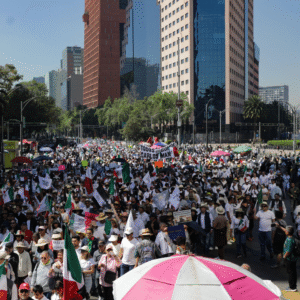
18-year-old Sofiia reports on the rise in youth-led protests around the world this year
As of 2025, youth-led protests are spreading around the world. The Nepalese protests in September popularised the term ‘Gen Z protests’ and inspired further movements in the rest of the world.
Similar actions have been seen in countries including Kenya, Madagascar, Morocco and Peru. The protests differ in origin, but share in common a defiance against government policies that hinder their freedom and a call to end corruption.
Harbingers’ Weekly Brief
Subscribe to the Harbingers’ Weekly Brief, a newsletter written by the editorial board of Harbingers’ Magazine, the world’s youngest newsroom, delivered to your inbox every Monday morning.
![author_bio]()
![author_bio]()


In Kenya, Gen Z protests first erupted in 2024 in response to punitive taxes targeting essential goods such as bread and sanitary products. In June 2025, new protests, primarily in Nairobi, were sparked by the death in police custody of political blogger and teacher Albert Omondi Ojwang. These were further fuelled by public discontent over rising living costs, government corruption and police brutality.
In early September, youth in Nepal started widespread protests in condemnation of the government’s blanket ban on social media platforms, and also accused officials of rampant corruption. Ultimately, these actions lead to a change in government on 12 September, chosen by Gen Z via the popular Discord app.
Young people in Nepal were not the only ones to use Discord during their protests. In Madagascar,young people started protesting at the end of September 2025, first against water and power cuts, then they demanded a complete overhaul of the political system – and succeeded. On 11 October, an elite military unit came out in support of the protesters; the following day, the president fled the country.
In early October, a leaderless collective of Gen Z youth, calling itself ‘Gen Z 212’, protested against corruption, lack of opportunity and business in Morocco.The motivation for this movement was the anger over discrepancies between government spending on stadiums for the 2030 FIFA World Cup and a subpar health system that falls behind countries with similar economies.
In response, the government vowed to implement policies to improve healthcare, education and increase youth participation in politics.
October also saw demonstrations in Peru. A rapper known as Truko, who was shot dead by a police officer during a large anti-government march – became a symbol of resistance against rising corruption and crime. The government imposed a state of emergency, restricting freedom of movement and allowing the army to patrol the streets alongside police.
The latest Gen Z protest happened in Mexico on 15 November, when thousands of youth took to the street to object to crime, corruption and impunity. The protests have been mostly peaceful, except for some clashes with police. Older generations have joined the protests too to support Gen Z.
From generation to generation
The answer to why this is happening lies within each generation’s reasoning, as such movements have also happened with previous generations.
Millennial protests, for example, were centered on the MeToo movement, against sexual abuse, harrasment and rape culture. In many of the recent protests, millennials also joined Gen Z, showing solidarity between different generations.
To combat authoritarianism and corruption, youth are holding authorities accountable in what some are calling transnational resistance.
Young people tend to protest things they want to change, as they care about the kind of world they will be living in in the future.
These recent protests are also nurturing a sense of justice and need for change in the next generation – Gen Alpha – which is important if they want to live in a fair world. A crucial piece of knowledge for the youngest generation is that they can always try and shape the world for the better. In the future, it is a safe bet that Gen Alpha will lead similar movements around the world.

Edited by:

© 2026 The Oxford School for the Future

