



Alicja, 17, and Karolina, 16, explore the layers of the book promoter’s role

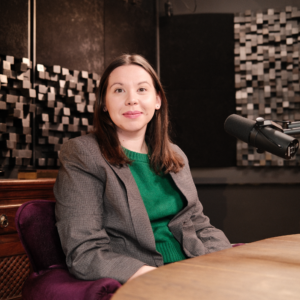
Julita Różak: ‘The hardest books for me to promote were the ones I really loved’
3 March 2026
‘This work fulfils my childhood dream,’ says book promoter Julita Różak
Julita Różak works in a publishing house in Warsaw, Poland, where she specialises in making sure new books reach the right audiences.
In conversation with Harbingers’ Magazine she explained how it feels to work in the publishing industry in the 21st century and how her profession affected her personal relationship with reading and literature.
The following excerpt from the recorded interview was edited for clarity and consistency.
Alicja: What led you to the world of literature? What was your relationship with books like in childhood? Was it this passion that led you to work in book promotion?
Julita Różak: Yes. I didn’t really think about it when I was applying for a job at a publishing house, but it actually is the fulfillment of a childhood dream, because I’ve been reading books pretty much my whole life.
Growing up, I kind of felt that reading books wasn’t “cool,” that you could find more interesting hobbies. That was also because, back then – about 10 years ago – the young adult book market wasn’t as developed. You could choose between school readings or very adult books on serious topics, so I drifted away from reading for a while.
Karolina: What does the job of a book promotion specialist actually involve?
It’s about making sure a book finds its readers and that it’s visible. In every publishing house, the scope of responsibilities is a bit different.
In my previous job in the promotion department, I used to write blurbs for the back covers of books, for example. Now I don’t do that, but instead I manage the publishing house’s social media and communicate with journalists. If you see a review in the media or an interview with an author, it’s likely that someone from a promotion department contacted that editorial team to send them the book before it was printed, and then provided author photos and the book cover for publication.

I also work with influencers and take part in book fairs, which have been becoming more and more popular in recent years. These fairs involve publishing houses setting up stands, displaying their books, and meeting readers. There’s an opportunity to sell books and to host meetings with authors, including book signings.
To be honest, if I take your question very literally, most of my job is just sitting at a computer, typing, and sometimes scrolling on my phone – like browsing Instagram – or posting something on the publishing house’s Instagram. Book fairs are one of the few occasions when an author can actually meet readers face-to-face, and when a promoter can see which book covers attract attention.
Alicja: How do you balance reading for pleasure and reading for work? Do they overlap?
They definitely overlap. Luckily, it often happens that the books I promote are ones I would gladly read after work anyway.
It’s really nice when, for example, it’s Friday at 2 p.m., you’ve sent all your emails, and you can just read a bit of the book you’re working on. I still feel a bit like I’m cheating the system, because it shouldn’t be the case that your job involves just sitting and reading a book.
It’s really nice when, for example, it’s Friday at 2 p.m., you’ve sent all your emails, and you can just read a bit of the book you’re working on. I still feel a bit like I’m cheating the system, because it shouldn’t be the case that your job involves just sitting and reading a book.
Karolina: Has there ever been a situation where you had to promote a book you didn’t think was good? What do you do in that case?
Yes, many times. Not too often, because I’ve been lucky to work at publishing houses that produce good books – but we’re all human. Of course, there have been many times when I loved a book that someone else thought was terrible.
So yes, it happens. You just promote what you’re given, to put it bluntly. And what do you do then? You do the same as with any other book – you think about its reference points, what might be interesting about it, what themes it contains.
Harbingers’ Weekly Brief
Subscribe to the Harbingers’ Weekly Brief, a newsletter written by the editorial board of Harbingers’ Magazine, the world’s youngest newsroom, delivered to your inbox every Monday morning.
![author_bio]()
![author_bio]()
![author_bio]()


Actually, it often happened that the hardest books for me to promote were the ones I really loved. Because then I had a very personal connection to them and really wanted to convince people to read them. But when it’s a book I’m less emotionally attached to, I approach it more objectively and more practically.
Often, if I don’t like a book, it’s because I don’t like that particular genre, type of story, or certain kinds of characters. But I know there are plenty of people who will enjoy it, so I focus on who it’s for, what themes it explores, and who might be interested – because I’m not the target audience for every book.


Edited by:
© 2026 The Oxford School for the Future

