



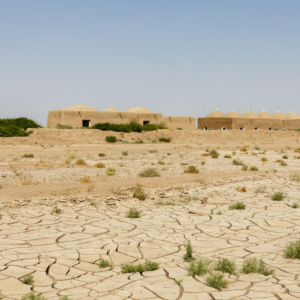
18-year-old Maryam from the Afghanistan Newsroom explains how droughts, floods and rising temperatures are damaging her homeland
Climate change is increasingly threatening livelihoods in Afghanistan, as drought and extreme weather affect millions.
Across the country’s dusty plains and fragile farmlands, the signs of climate change cannot be ignored, according to a 2023 report from the UN’s Office for the Coordination of Humanitarian Affairs (OCHA).
Earlier this month, the UN Development Programme (UNDP) declared: “Afghanistan is among the most climate-vulnerable countries in the world, facing increasing droughts, floods, and water shortages despite contributing very little to global greenhouse gas emissions.”
In the past few years, the country has faced severe droughts, rising temperatures and water shortages – conditions that are difficult for rural communities where people depend on farming.
For many farmers, drought has become a constant struggle and made life even harder. “We used to depend on the rain,” Ahmad, a farmer in Bamyan province, told Harbingers’. “But now it doesn’t rain, there isn’t enough water for farming, and our land is turning into dust. We don’t know how long we can survive like this.”
Crops fail season after season and leave families without a stable income. What was once fertile land is now dry and useless, increasing poverty and food insecurity across Afghanistan.
Shortage of water is another serious problem. In many villages, access to clean water is limited, and families go long distances every day to get it. Especially for women and children, who are often the ones responsible for collecting water, it takes hours, energy and time away from school and work.
At the same time, Afghanistan is facing an increase in natural disasters: sudden floods ruin homes and farmlands, while extreme heat damages crops and affects health. These events make life harder and more unpredictable for many people.
Harbingers’ Weekly Brief
Subscribe to the Harbingers’ Weekly Brief, a newsletter written by the editorial board of Harbingers’ Magazine, the world’s youngest newsroom, delivered to your inbox every Monday morning.
![author_bio]()
![author_bio]()


As conditions worsen and problems increase, many rural families have no choice but to leave their homes. People are moving to urban areas in search of safety and opportunity, and displacement is becoming more common. According to the United Nations’ refugee agency, UNHCR, there are more than 3.5 million internally displaced people in the country. This leads to overcrowded cities, unemployment and other social issues.
Organisations such as Islamic Relief and the Aga Khan Development Network (AKDN) are helping to improve water systems, providing emergency aid and supporting farmers to adapt to these new environmental conditions. However, while these programmes offer support, they are often not enough to deal with the problem.
Afghanistan stands at a critical juncture. Climate change is not only an environmental issue; it is also a human crisis that affect jobs, stability and the future of communities. Addressing it will need long-term efforts, better solutions and international support because the damage cannot be undone.

Edited by:

© 2026 The Oxford School for the Future

