



17-year-old Ryleigh voices her concerns about politicians’ green agenda, and asks her generation to step up
Ryleigh Lemsic is the one of the winners of the Harbinger Prize 2025. This is her winning entry.
The Philippines has huge untapped reserves of copper, gold, nickel, zinc and silver estimated to be worth a trillion US dollars, making it the fifth-most mineralised country in the world. In 2023, total exports of minerals were worth $7.32m (408.4m Philippine pesos). Yet were all of these exports sourced legally? We cannot be certain, because illegal mining continues to be a major problem in the country.
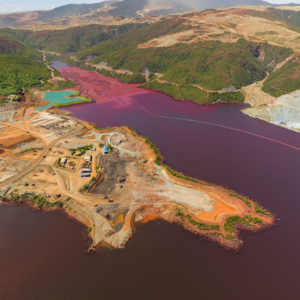
While it is true that the mining industry makes substantial profit and provides livelihoods for many, employing around 212,200 workers in 2025, illegal mining continues to adversely affect our environment. For example, illegal small-scale gold mining has endangered biodiversity and encroached on Indigenous lands on Mt Apo, the country’s highest peak and a popular tourist destination.
Harbingers’ Weekly Brief
Subscribe to the Harbingers’ Weekly Brief, a newsletter written by the editorial board of Harbingers’ Magazine, the world’s youngest newsroom, delivered to your inbox every Monday morning.
![author_bio]()


Illegal mining also causes soil degradation, leading to a lack of usable farmland, something an agricultural country such as the Philippines needs. It causes water pollution and deforestation, which can have a negative impact on the health and economies of local communities. The exploitation of land for precious metals often infringes on Indigenous areas, particularly in the Cordillera region where groups such as the Bontocs, the Kalingas and the Ifugaos reside. This pressing issue threatens people now and in the future, so clearly it concerns my generation, Gen Z.
In spite of its detrimental consequences, there remains a lack of concrete action against illegal mining at national level. On the contrary, the Philippines seems to be moving in the opposite direction; for example, in 2021 it lifted the ban on open-pit mines, imposed four years earlier because of ecological damage such mines caused.
Although illegal mines continue to threaten our environment and people, efforts to tackle the problem are slow and minimal. This seems to reflect the absence of green policy-making in the current administration, not just against the issue of illegal mining but towards other environmental issues such as non-renewable energy.
Green policy-making is essential for creating and maintaining a good quality of life for a nation’s citizens. All aspects of a society are, in a way, reliant on the ground it is built on.
The Philippines is one of the most resource-rich countries in the world. It is important that we set policies to utilise these resources to their greatest potential, but it is even more important that these policies protect them.
Otherwise, people are likely to starve, the economy will most certainly fail, and the country will be left helpless against calamities that will undoubtedly come. Due to all of these reasons, it is clear that green policy-making should be a priority.
A green ray of hope
Fortunately, the results of the 2025 Philippine general elections have brought hope that green policy-making will be prioritised sooner rather than later.

One notable win is that of Nanding Marin,anti-mining activist and the new mayor of San Fernando, Romblon. In 2023, he went viral for being part of a human barricade blocking mining trucks entering the community, and was dragged away by police officers.
On the national level, the victory of senator Kiko Pangilinan – who was taggedby an alliance of environmental groups led by Earth Island Institute Asia Pacific as one of the “greenest” candidates before the election – is also a step in the right direction.
There were green wins in Congress too, with ‘partylists’ (groups of aspiring congressional candidates) endorsed by the Green Thumb Coalition – such as Akbayan Partylist and Kawanggawa Partylist – securing seats in the house. These wins can be attributed to a surge in younger voters, who are more educated on the importance of the environment.
In order for these efforts to take into effect, we must seat more green policy-makers in legislative positions. One senator and two partylists are not enough – especially since other candidates (such as Arlene Brosas, France Castro, Luke Espiritu, Amirah Lidasan and Leody de Guzman) were ranked higher than Kiko Pangilinan as the “greenest” senators. Greener policies, such as the Philippine Ecosystem and Natural Capital Accounting System act, have been enacted after the elections, but many have yet to be implemented.
However, it is clear from the election results that our generation holds so much power to create systemic change. As the youth are those who will inherit the future of the nation, it is only fitting that we have a say in who leads our state. This is why I’m glad that, for once, the cries of the young are heard. But as the world keeps spinning, there is always more to be done.
View this post on Instagram
I urge my fellow teens to use your power, speak with your voice and give power to candidates that prioritise nature. Soon, even more of us will be able to uphold our civic duty and vote, which is one of our only opportunities to pave the way for real change.
Because of this, vote wisely. Remember, if we continue to prioritise urban and economic development over safeguarding our environment, we will find, ultimately, that we cannot eat either the money we earned or the concrete with which our infrastructure is built.

© 2026 The Oxford School for the Future