



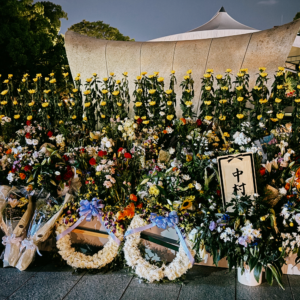
16-year-old Irma questions the moral limits of nuclear power – from Japan to Ukraine – with a philosopher’s help
Today, when wars are increasingly fought with non-human elements, such as drones and algorithms, Dr Sanshiro Hosaka reminds us that ethics still matter. A doctor of philosophy who specialises in Russian propaganda and warfare, Dr Hosaka, a research fellow at the International Centre for Defence and Security (ICDS), a think tank in Estonia, explained to Harbingers’ Magazine how moral frameworks continue to shape decisions even in an anarchic international system.
In the 21st century, warfare has been modernised to the point where drones, artillery and nuclear weapons have become deadlier than ever. Yet amid this technological violence, Dr Hosaka argues that ethical considerations continue to shape the way that states act.
Harbingers’ Weekly Brief
Subscribe to the Harbingers’ Weekly Brief, a newsletter written by the editorial board of Harbingers’ Magazine, the world’s youngest newsroom, delivered to your inbox every Monday morning.
![image]()
![author_bio]()
![author_bio]()


He said that although “states act primarily on the basis of what they view as national interests rather than ethics, this does not mean states are not constrained by ethical considerations at all. Commonly held values among many states – those enshrined in the UN Charter, such as respect for sovereignty, human rights and the rule of law – may [or] can contribute to shaping states behaviour beyond immediate self-interest
Institutions such as the United Nations, NGOs and protest movements have long worked to prevent global destruction and promote peace. But Dr Hosaka cautions that international organisations alone can’t save humanity.
“Various popular protests… such as the anti-Vietnam War movement and anti-nuclear campaigns, may influence state policy,” he said, but this is mainly possible “in democracies where freedom of expression and assembly and competitive elections are guaranteed”.
When morality is manipulated
Public protests unite people through shared moral conviction, creating a so-called “national conscience” – a sense of collective responsibility for a nation’s actions both at home and abroad. Yet, Dr Hosaka warns, this conscience can be exploited.
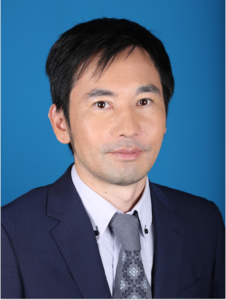
Dr Sanshiro Hosaka.
During the Cold War, the USSR weaponised moral movements abroad for its own political purposes. “The USSR supported anti-Vietnam War campaigns in Japan to highlight the ‘imperialistic policies’ of the United States,” he explained, adding that “Moscow also appealed to the ‘national conscience’ of Americans who feared nuclear war with the Soviet Union.”
This manipulation was not limited to the streets. Soviet intelligence understood that academics and thinkers could influence policy and sought to use them.
As Dr Hosaka notes, the Soviets spread pro-Soviet narratives through scholars and peace movements, promoting ideas such as ‘nuclear war should be avoided at any cost’ and ‘improving relations with Moscow is essential, regardless of human rights violations’. These campaigns, he said, aimed to weaken Western unity and reduce America’s global influence.
Ethical paradox of nuclear power
If the national conscience represents humanity’s moral restraint, nuclear weapons embody the opposite – power without conscience.
“These weapons have now been embedded in international security systems… and play a fundamental role in today’s war and international politics,” Dr Hosaka said.
He added: “This became evident when Russia, invading Ukrainian territory, threatened Kyiv and its partners with the use of nuclear weapons. It created hesitations among Western leaders worried about further escalation with the nuclear weapon state, working to dissuade them from providing necessary military assistance to Kyiv.”
This fear of escalation, Dr Hosaka explained, emboldened Russian leaders. “In the 1990s, Ukraine was persuaded to give up its Soviet-era nuclear arsenal in exchange for security assurances and recognition of its territorial integrity under the Budapest Memorandum, signed by the US, the UK and Russia. Today, Ukraine has been invaded and devastated by one of its signatories, Putin’s Russia, and pressured by another, Trump’s America, to surrender its territory.”
He also questioned “if countries facing existential threat, like Ukraine, were to consider (re)developing nuclear weapons to defend its territory and people, would we have strong moral arguments to stop them?”
Lessons from Hiroshima and Nagasaki
Nuclear weapons remain among the most unethical tools ever used in war. They serve as deterrents, granting their possessors the illusion of invincibility and allowing them to ignore institutions like the UN, and the pull of conscience.

Dr Hosaka said that when Russia launched its full-scale invasion of Ukraine in 2022, Sueichi Kido, secretary general of Nihon Hindankyo, condemned Russia for brandishing its nuclear capabilities to intimidate other countries. Founded in the 1950s by Japanese A-bomb survivors, Nihon Hindankyo was awarded the 2024 Nobel Peace Prizefor its decades-long campaign to rid the world of nuclear weapons.
However, Russia’s Foreign Ministry “dismissed the Nobel committee as historically influenced by the CIA, and claimed that recent awards have been politicised against Russia,” Dr Hosaka added.
He said that the lessons of the Hiroshima and Nagasaki bombings have largely been absorbed by world leaders, since no nuclear weapons have been used since 1945. Yet, some Western policies have inadvertently encouraged renewed aggression.
For example, after Russia’s invasion of Georgia in 2008, President Obama tried to “reset”US relations with Russia, to rebuild connections amid growing tensions. One outcome of this was the 2009 joint statementin which the two countries agreed to work together on global nuclear security. “Yet the ‘reset’ policy arguably emboldened Russia, which went on to invade Ukraine six years later,” Dr Hosaka said.
Many organisations, including the International Campaign to Abolish Nuclear Weapons (ICAN), continue to campaign for nuclear disarmament and non-proliferation. However, Dr Hosaka believes those goals “cannot be pursued in isolation from security realities. Nuclear weapons will not disappear overnight.
“I believe that a more urgent priority is to strengthen defence capabilities and provide security guarantees to the democracies facing real threats from nuclear-armed autocracies. Ukraine is a case in point.”
When powerful states possess nuclear weapons, advanced artillery and strong alliances, they become fearless, often disregarding ethics and moral concerns. Yet, in democracies, citizens can still wield the power of their national conscience to hold leaders accountable and push for a more ethical world order.
With interview support from Daniel Zhang

Edited by:

© 2026 The Oxford School for the Future