Harbingers’ Magazine is a weekly online current affairs magazine written and edited by teenagers worldwide.
harbinger | noun
har·bin·ger | \ˈhär-bən-jər\
1. one that initiates a major change: a person or thing that originates or helps open up a new activity, method, or technology; pioneer.
2. something that foreshadows a future event : something that gives an anticipatory sign of what is to come.
We and our partners may store and access personal data such as cookies, device identifiers or other similar technologies on your device and process such data to personalise content and ads, provide social media features and analyse our traffic.
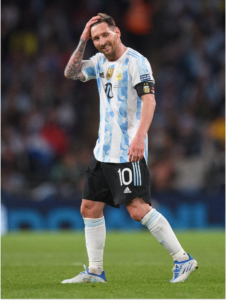
I’m Argentinian, and I haven’t met Messi, nor do I particularly like football. In fact, I only watch football every four years during the World Cup.
Argentina is the eighth-largest countryin the world, so you think it would be easy to find on a map. Despite this, when I lived in the United States, many US Americans frequently asked me where my home country was. Even if they knew, they would say something along the lines of, “Messi! That’s where Messi is from.”
To an extent, I get it. Football is the reference point. When people think of Argentina, Maradona and Messi are the first people that come to mind. But there are so many other people worth mentioning, such as musical legends Gustavo Cerati and Andrés Calamaro, and world-renowned authors such as Jorge Luis Borges and Julio Cortázar.
Apart from these distinguished individuals, we also have distinct social customs, such as asado – not only our national dish, but a weekly social gathering among family and friends – and enjoying mate (a herbal tea) daily.
Harbingers’ Weekly Brief
Subscribe to the Harbingers’ Weekly Brief, a newsletter written by the editorial board of Harbingers’ Magazine, the world’s youngest newsroom, delivered to your inbox every Monday morning.
See you on Monday!
Ooops - please try again.
Argentina is also a bit different from its neighbours. Some call it “the Paris of South America” and claim it’s very European.
I believe that Argentina is misunderstood and not appreciated enough. Here are some common assumptions: read on to find out which ones are true and which aren’t.
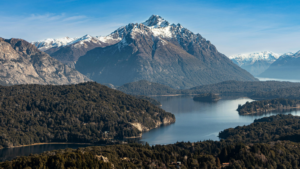
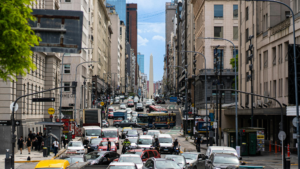
Argentina covers approximately 2,780,400 sq km and stretches about 3,800 km from north to south. While it’s true that more than a third of the population (almost 16 million people) live in the greater metropolitan area of the capital, Buenos Aires, Argentina can absolutely not be reduced to only one city!
Don’t forget the Andes Mountains, Patagonia, the Iguazú Falls, the wine regions of Mendoza, the Pampas and much, much more. Buenos Aires is just one small part, geographically, and there are regional differences in culture, climate and lifestyle.
Some of the Andes’ highest peaks are in Argentina.
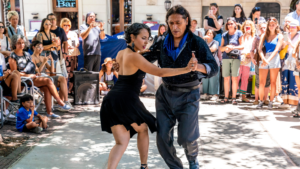
This is a common myth. But I really don’t know why people think this – I don’t know anybody who dances tango. The only time I have seen tango dancers is on Avenida Corrientes (a touristy street in Buenos Aires) when I was leaving a restaurant. While tango is ingrained in Argentine culture, it does not necessarily mean we all know how to do it!
Argentina has countless genres of music. Many Argentinians love listening to rock nacional legends such as Charly García, Luis Alberto Spinetta and (the already mentioned) Gustavo Cerati.
Additionally, the most recent survey from the System of Cultural Information of Argentina found that cumbia and reggaeton were listened to the most (62%), with rock nacional in second place (59%).
This misconception comes from the notion that Argentina is very European. Although European immigration did shape the country, Argentina is ethnically diverse, with strong Indigenous, Afro-Argentine and mixed-heritage roots.
Argentinians can seem direct and intense, but we are usually expressive and very welcoming once you get to know us. Like most of our Latino neighbours, we are passionate.
We tend to be loud and use many hand gestures – such as our distinctive use of pinching our fingers to express disbelief. Like other Latin American countries, we also use a single kiss to greet people at a social gathering.
Also, we are definitely not cold. On the contrary, we are one of the countries that has the most awareness concerning mental health. Argentina has been called “the therapy capital of the world” because it has more than 222 psychologists per 100,000 inhabitants.
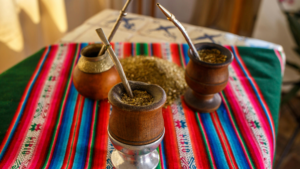
Mate is not just a drink. It’s a ritual. It’s a way of life.
A herbal tea rich in caffeine as well as vitamin B, potassium, iron and zinc, mate is made by placing dried yerba mate leaves (botanical name Ilex paraguariensis) in a hollow gourd (mate), pouring over hot water and drinking it with a bombilla (metal straw).
One of the biggest debates for Argentinians is whether to drink dulce (sweet) or amargo (bitter) mate. Personally, I prefer it sweet. I also enjoy tereré during the summer – cold, with juice rather than water – but I’m not the biggest fan of mate.
You’ll see mate just about anywhere and everywhere. At breakfast, at school, at the workplace, in the afternoon during merienda (tea time), at almost any time of day.
Maybe don’t drink it in the evening, though. You’ll probably be up all night with your heart racing (because of the caffeine) and regretting all of your life decisions. You’ve been warned!
The traditional way of drinking mate, Argentina’s national drink.
The main type of Spanish spoken in Argentina is Rioplatense, which is characterised by a strong Italian-influenced intonation. Argentine Spanish is distinct, with its own accent, vocabulary and grammar, like using vos instead of tú. Saying tú sounds too neutral and formal for us, and you won’t catch an Argentinian saying it.
We are also known for our informal language and slang, such as boludo – which has several meanings. Swearing is considered normal, to a degree (of course, it varies from individual to individual). It’s allowed on daytime TV as it tends to be playful rather than aggressive, but it is not tolerated at school.
One is that there are more cows than people in Argentina. There are about 52 million cattlefor a population of around 46 million people – an average of 1.13 cows per inhabitant.
Many Argentinians are football fanatics and ‘belong’ to a club.
We spend a lot of time with friends and family, as we typically enjoy asados every Sunday. Sundays are seen as family days, where everyone winds down and takes it easy.
And, finally, we are indeed the “best audience in the world”and many artists, from Madonna to AC/DC and the Police, have chosen Argentina to record their live DVDs.
Now, all that’s left to do is for you to come visit and see for yourselves!
Born in 2008 in Buenos Aires, Argentina, Malena is passionate about journalism, psychology and literature. Having lived in the United States, Brazil and now Argentina, Malena brings a multicultural perspective to her pieces and studies.
In her free time, she enjoys playing tennis, spending time with friends and reading. She is actively involved in school activities, especially Model United Nations (MUN), where she explores global issues and brainstorms solutions.
Malena is fluent in English and Spanish, with additional knowledge of Portuguese and French.
opinion
🌍 Join the World's Youngest Newsroom—Create a Free Account
Sign up to save your favourite articles, get personalised recommendations, and stay informed about stories that Gen Z worldwide actually care about. Plus, subscribe to our newsletter for the latest stories delivered straight to your inbox. 📲
We use cookies to ensure that we give you the best experience on our website. If you continue to use this site we will assume that you are happy with it.