



16-year-old Jennifer explores the challenges facing the Winter Olympics as climate change affects snow conditions
Every four years, the world pauses for the Winter Olympics, to cheer on their favourite athletes performing tricks and flips and sporting miracles in a magical winter wonderland. But as global warming worsens, the competition faces challenges that no amount of Olympic spirit or medals can fix. In the increasingly warm winters of the 21st century, snow is no longer a guarantee.
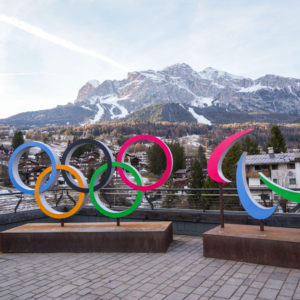
The 2026 Winter Olympics are currently underway (6–22 February) in two host cities in northern Italy, Milan and Cortina. For the past ten years, the average temperature in Cortina in February has been about -2.7ºC – that’s almost 5ºC higher than the average temperature in February 70 years ago, in 1956, when the Games were last held at the same location.
Harbingers’ Weekly Brief
Subscribe to the Harbingers’ Weekly Brief, a newsletter written by the editorial board of Harbingers’ Magazine, the world’s youngest newsroom, delivered to your inbox every Monday morning.
![author_bio]()


As the average temperature this month slowly creeps above freezing, many places will be unable to produce or maintain the snowy conditions that athletes need to perform their sports.
As a result, the Olympics (and numerous ski resorts worldwide) are turning to a temporary solution: artificial snow. This is mainly made with a chemical called sodium polyacrylate, little flakes of a plastic-like substance that are able to store more water to adapt to the warmer climate.
Artificial snow seems like a clever solution, but it is both harmful to our environment and expensive. It also requires an astronomical amount of water.

At the last Winter Olympics in Beijing, China, it was estimated that 49 millions gallonsof water was used to produce fake snow – that’s a day’s worth of drinking water for 100 million people. Considering the world is running out of freshwater, that is a heavy price to pay.
The other ingredients of artificial snow also pose environmental risks. Since it is dense with chemicals, it takes longer to melt. A 2022 study by the Department of Environment Studies and Sustainability at Stockton University in the US foundthat it prolongs the seasonal melting process by two to four weeks, altering plant growth and forcing animals to migrate.
In addition, scientists have yet to figure out the negative effect of these chemicals, some of which may contain fungicidal protein that disturbs the ecosystem and other compounds that animals can’t digest.
Athletes have mixed feelings
Not all Olympic events face the same risk. Indoor ice sports such as figure skating, hockey and curling remain relatively unaffected. However, outdoor sports such as skiing and snowboarding, in all their many variants, depend on sufficient snow coverage.
Athletes have mixed feelings. Artificial snow creates a very different surface from natural snow: dense and icy rather than soft and powdery. Racing skiers enjoy fake snow’s capability for speed, and powerful and tight turns. Others, such as snowboarders who have to do flips and tricks, find it hard to perform their skills to the best of their ability.
Also, the dense, icy conditions can be dangerous in the event of crashes, increasing the risk of injuries.
View this post on Instagram
With growing concerns over artificial snow, experts are calling for more effective long-term solutions. Some are pushing to shift the Winter Olympics earlier in the calendar to avoid the potential warm temperatures of late February and early March. The International Olympic Committee (IOC), which is in charge of both the Winter and Summer Olympics, said it is considering moving the Winter Olympics to January.
An IOC study suggests that only ten nations will be able to host the Winter Olympics with good conditions by 2040. Some experts propose that the Games should follow a rotating system of host countries, using a limited number of climate-reliable locations. This would not only improve the reliability of snow conditions, but also be more economical as less infrastructure would need to be built for each edition.

© 2026 The Oxford School for the Future