



19-year-old Nabila from the Afghanistan Newsroom interviews three women about Afghanistan’s controversial mahram policy
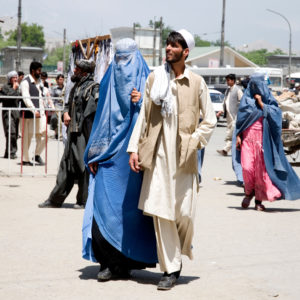
In Afghanistan, women cannot move freely, not to school, not to work, not even to a hospital without a close male relative accompanying them – this is the mahram (male guardian) policy.
A mahram is someone with whom a woman is not obliged to wear hijab, such as a husband, brother, father, son, grandfather or uncle, who acts as her guardian and protector.
Under the rule of the Taliban, this is not just a restriction on movement; it is a tool of control that has turned daily life into a minefield of obstacles for women, especially widows, single mothers and those without male relatives nearby.
This article brings together three voices – Zahra, Mina and Parwin (not their real names) – whose stories reveal how the mahram system is silencing and sidelining women.
Harbingers’ Weekly Brief
Subscribe to the Harbingers’ Weekly Brief, a newsletter written by the editorial board of Harbingers’ Magazine, the world’s youngest newsroom, delivered to your inbox every Monday morning.
![author_bio]()


Zahra: Working mother
An office worker in Kabul, Zahra lost her husband several years ago. She now raises her three children alone and is the family’s sole breadwinner. But to get to work each day, she cannot simply step out of the door. Her younger brother must accompany her as her mahram.
“I wish one day I could go to work alone, without anyone sacrificing their time for me,’’ she told Harbingers’ Magazine.
Every morning begins early. Zahra prepares breakfast, washes clothes, gets her children ready for school, and then heads to the office where she answers emails, writes reports and attends meetings. She says she feels safer with her brother present, but guilt hangs over her.
Her brother had to give up his university studies in order to be able to escort her each day. Meanwhile, her children sometimes miss school, and money is tight. Zahra is stuck in a cycle of stress trying to hold her family together, without the right to move freely on her own.
Still, she holds on to hope not just for herself, but for her children to grow up in a future where freedom is not gendered.
Mina: Widowed and ill
For Mina, a widow living alone with a heart condition, even getting to the hospital has become a life-or-death waiting game.
One evening, when her chest pains grew unbearable, she asked a male cousin to accompany her to the hospital. But he was busy and couldn’t help. She had no choice but to wait in pain, alone, afraid.
Her daily life is quiet but exhausting. Cooking, cleaning and helping neighbours are all part of her routine, even as her health declines. The medical staff want to help her, but they are bound by the same rules. She is forced to sit for hours, untreated, until a man can appear and give her legitimacy.
Mina dreams not of luxury or escape but simply of autonomy: “I wish that one day women can decide about their own lives.” To walk into a hospital when she needs care. To look after herself without waiting for a man’s permission.
Parwin: Scared to catch a taxi
Parwin’s only goal that particular evening was to get home. Her children were tired and hungry, and she hailed a taxi to take them back safely. But before they could reach their destination, the Taliban stopped the vehicle.
“Where is your mahram?” they asked. “Why is this woman alone?”

Parwin tried to stay calm. She held her children close, whispering reassurance she didn’t feel. The Taliban condemned and threatened her for being without a male guardian but allowed her to leave, giving her a chance to follow the rules next time.
In today’s Afghanistan, every street feels like a trap if a woman is without a male companion. “I wish one day I can travel with my children safely, without needing a man’s permission,’’ she said.
Nahid’s story reflects the constant anxiety Afghan women live with. Even the most basic acts such as taking a taxi carry risk, fear and sometimes punishment. These include verbal threats, public shaming, harassment, fines, denial of services, arrest, detention and even physical punishment. Enforcement varies by location, but the rules create constant fear.
The mahram policy is more than a restriction – it is a system that erases women from public life and places their freedom under male control. For Zahra, Mina and Parwin, these rules are not abstract laws, they are lived realities that disrupt everything from work and education to health and safety.
Their stories show that these rules don’t just control where women go. They affect how women feel, how children grow up and how families survive. They turn homes into cages and independence into a privilege granted only through the presence of a man.
Still, despite fear and hardship, these women hold onto their voices and their dreams. Of freedom. Of safety. Of a future where Afghan women can simply live without waiting for permission.

© 2026 The Oxford School for the Future